
TL;DR
- Follow up on the date the buyer gave you. If there’s no date, give them time to review before checking in.
- Reference the quote and clarify one thing the buyer needs to decide, such as seats, setup, support, or plan fit.
- When repeating a price, include the currency, scope, and billing term. Separate recurring charges from one-time fees.
- Ask one focused question. If the buyer still doesn’t respond and there’s no agreed next step, pause.
The buyer asked for pricing. You sent it. Now you’re deciding what to say without sending another “Just checking in.” The useful next email depends on whether they’re comparing plans, checking what the quote covers, or still deciding how much of the project they need.
A follow-up email after sending pricing should name the quote or plan you sent, clarify the detail that affects the buyer’s decision, and ask one question about cost, scope, or fit.
Table of Contents
When Should You Follow Up After Sending Pricing?
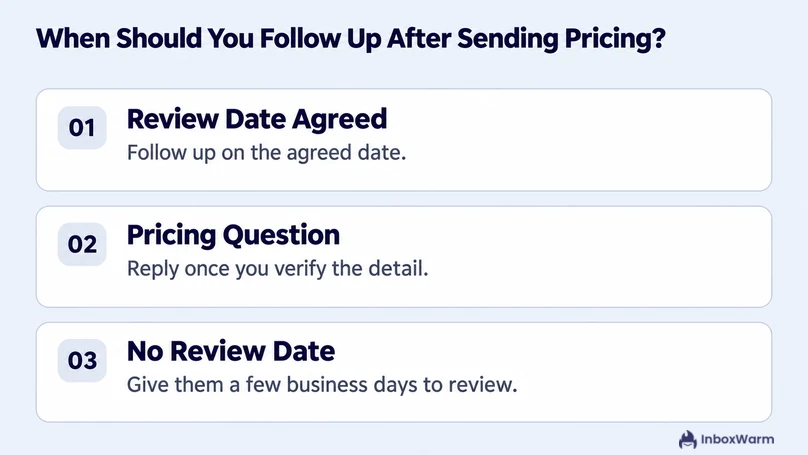
Start with the review date the buyer gave you. If they asked a specific question about the quote, answer when you’ve verified the detail. If they offered no date, give them a few business days to review before sending a brief check-in. Allow more time if they need to compare several vendors or gather input from finance.
| Situation | When to Write | What to Clarify |
|---|---|---|
| They gave you a review date | Follow up on the agreed date. | Ask whether the quoted scope still fits. |
| They asked what a fee covers | Reply once you’ve verified the line item. | State what’s included and what’s separate. |
| They’re comparing two plans | Send the comparison before their decision date if they gave you one. | Tie the recommendation to one requirement. |
| They went quiet and gave no date | Give them a few business days to review, then check in once if the quote is still relevant. | Ask whether the scope or timing has changed. |
What Should a Pricing Follow-Up Email Include?
Write a note your buyer can answer without comparing several versions of the quote. If you restate pricing, make the number legible on its own.
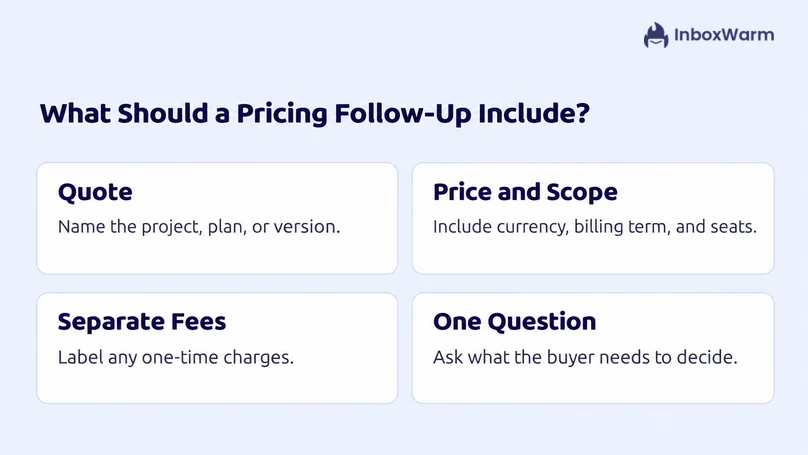
- Identify the quote. Name the project, plan, or quote version the buyer received.
- Explain the price in context. Include the currency, billing term, seat count or scope, and any setup fee that affects the comparison.
- Explain what changes between plans. Pick the difference that matters for the buyer’s actual workflow.
- Ask one decision question. For example, ask whether they need ten or fifteen seats at launch so you can confirm the correct total.
Salesforce’s guide to sales quotes describes using line items to show pricing for specific products and services. Give the buyer the same clarity in your note by labeling any separate fee and keeping the figures consistent with the current quote.
4 Email Templates to Use After Sending Pricing
Choose the template that answers the buyer’s next question. Replace the bracketed details with the current scope and pricing before sending.
1. Check In After Sending a Quote
Use this when you’ve sent the requested pricing and the buyer’s review date has arrived.
2. Clarify What the Price Includes
Use this when the buyer has a question about seats, onboarding, support, or a separate fee.
3. Help the Buyer Choose Between Two Plans
Use this when the buyer needs to compare plans against a specific requirement.
4. Follow Up After Sending Pricing With No Response
Use this when the buyer’s review window has passed and you have a specific reason to check in. Reply in the original thread.
What Does a Quote Follow-Up Email Look Like in Practice?
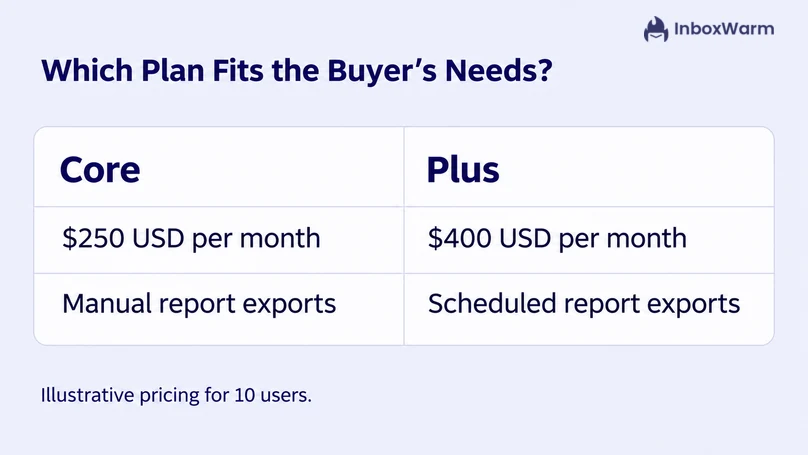
These fictional examples show how to explain a separate fee and compare two plans. The prices and plans are illustrative.
Example 1. Explain a One-Time Setup Fee
Example 2. Compare Two Plans Using the Buyer’s Requirement
How Do You Follow Up if the Buyer Goes Quiet After Receiving Pricing?
Go back to the last thing the buyer told you. If they wanted to price a smaller rollout, ask whether the expected seat count changed. If they planned to review the quote with finance, ask whether finance needs a different breakdown. InboxWarm’s sales follow-up templates show how to make a check-in about a specific detail the buyer is evaluating.
If they say the quote is outside their budget, ask which part is hard to justify before suggesting a different plan. A buyer who needs fewer seats has a different problem from one who needs a lower upfront cost. Use a focused question about the buyer’s priorities to confirm what they need to keep. If you’ve sent a relevant check-in and there’s still no reply or agreed next step, leave the next move with the buyer.
Will Your Buyer See the Pricing Follow-Up Before Their Review?
The buyer asked for pricing. If the follow-up that explains the quote lands in spam, they may review it without the details they need. Use InboxWarm to warm up your sending inbox ahead of future outreach.
Frequently Asked Questions
Use these answers to decide when to send another note, how to explain the quote, and what to share with finance.
When Should You Follow Up After Sending a Quote?
Use the buyer’s review date or the checkpoint you agreed on. If they gave you no timeframe, a few business days is a reasonable starting point for one short follow-up. Give complex quotes enough time for review.
Should You Resend the Quote in a Pricing Follow-Up?
Reply in the original thread if the buyer can already access the quote. Resend or link to the current version if they ask for it, can’t open it, or requested revised pricing.
What if the Prospect Says the Price Is Too High?
Ask whether the issue is the total, the billing commitment, or something beyond the scope they need. If a smaller option exists, explain what it covers and what the buyer would give up.
Should You Include the Price in the Email Body?
Include the relevant price if it saves the buyer from opening a quote to answer your question. Name the currency, billing term, and scope so the number makes sense on its own.
How Do You Follow Up When Pricing Needs Finance Approval?
Offer a short breakdown your contact can forward. Include the current total, billing frequency, and separate fees, then ask whether finance needs any additional detail.