

TL;DR
- Check the article to confirm the mention is genuine and that there’s no relevant link already on the page.
- Contact the writer or editor with the exact paragraph, one suggested URL, and a reason it helps readers.
- Link to the homepage for a general brand mention, the specific page for a named tool, or the original report for a statistic.
- Leave the link decision to the publisher. Follow up once if you can make the request easier to review.
Someone mentioned your brand in an article. The wording is right, but readers have to search for the tool or report the writer referenced. That gives you a useful reason to email the editor.
To ask for a backlink after an unlinked brand mention, thank the writer, identify the exact mention, and suggest one page that helps their readers. A good unlinked brand mention outreach email makes the edit easy to find and gives the editor room to decide.
Table of Contents
What Is an Unlinked Brand Mention?
An unlinked brand mention is a reference to your company, product, tool, or research on another website without a clickable link to the relevant page. If a link already exists but points to an old or broken URL, ask the editor to update that link.
How Do You Check Whether a Brand Mention Is Worth Pursuing?
Look for a relevant mention where a link would give readers something they can use or verify. Search for your brand or a distinctive product or report name in quotation marks. Open each promising article and check the sentence yourself. The same name may refer to another company, and the page might already link to you elsewhere. A paid placement, a passing reference with no useful destination, or an article that’s no longer maintained may be a poor fit for a request.
Prioritize pages where the link adds something specific, such as access to the report behind a statistic or instructions for using a tool the article recommends. An editor can assess that request without guessing what you want.
Which Page Should You Suggest for the Backlink?
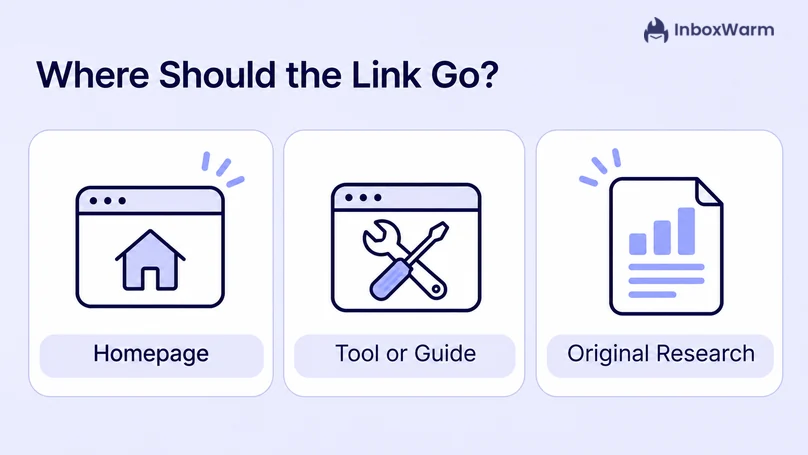
Match the destination to what the reader expects to find when they click. Check that the destination loads and contains what the article describes.
| What the Article Mentions | Suggested Destination | What Readers Get |
|---|---|---|
| Your company by name | Official homepage or company overview | A way to identify the company and learn what it does |
| A named tool, guide, or feature | The exact tool, guide, or feature page | Direct access to what the writer described |
| A figure from your research | The original report, ideally the relevant section | The figure, sample, timeframe, and methodology |
Make the suggested page easy to assess by explaining what readers can do or check there. For example, a free calculator belongs on its own URL so readers can use it without hunting through your homepage.
What Should an Unlinked Brand Mention Email Include?
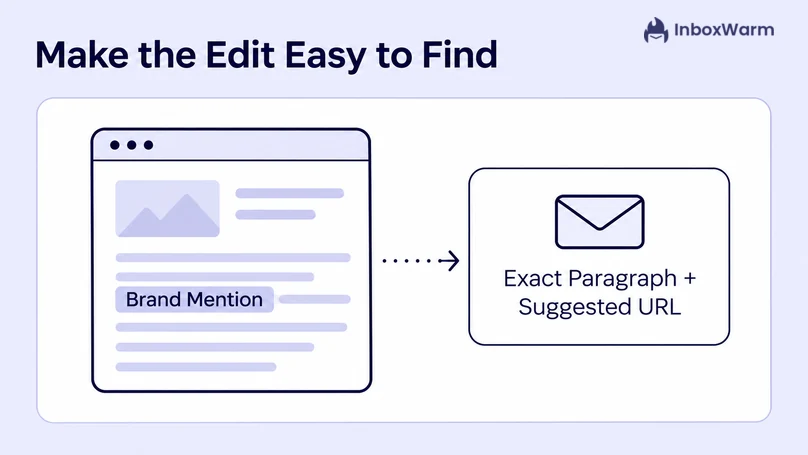
Give the editor the article URL, the exact text or section, one suggested destination, and one sentence explaining the reader benefit. Use the brand, tool, or report name already on the page to identify the mention. Use a subject line that identifies the article or resource. If the publication has a corrections form or editorial policy, follow the route it gives you.
Leave the wording and link attributes to the editor. Google’s link spam policies list buying links for ranking purposes and excessive link exchanges as examples of link spam. Keep your request focused on an editorial choice that helps readers.
Which Unlinked Brand Mention Outreach Email Template Should You Use?
Use the first template for a general brand mention, the second for a product or resource, and the third for a cited statistic. Use the fourth when your first request went unanswered and you can make the edit easier. Replace each placeholder with a verified detail before sending.
1. How Do You Ask for a Link on a General Brand Mention?
Use this when readers would benefit from a direct way to find the company.
2. How Do You Ask for a Link to a Specific Tool or Guide?
Use this when the article names your tool, guide, or feature and a direct link would save readers a search.
3. How Do You Ask an Editor to Link to the Source of a Statistic?
Use this if the article cites a figure from your research but readers have no link to the source. Make sure the report supports the exact claim.
4. What Do You Say if Your Backlink Request Goes Unanswered?
Reply in the original thread after giving the editor time to review. Send this when you can make the edit easier to assess.
What Does a Backlink Request Look Like in Practice?
These two fictional examples show where to place the article URL and suggested destination in a backlink request. The example URLs use fictional domains.
Example 1. How Can You Send Readers Straight to a Named Tool?
Example 2. How Can You Help Readers Check a Statistic?
In a real request, include the article link and the exact tool or report link in the email so the editor can open both from the thread.
Should You Follow Up if the Editor Doesn’t Reply?
Give the editor time to review. If you write again, make it easier to find the mention or verify the source. The same approach works when you follow up after sharing information someone needs to review. If the publisher declines or the follow-up goes unanswered, leave the decision with them.
Will the Editor See Your Backlink Request?
You found the exact paragraph and picked a useful link. If the email lands in spam, the editor may never see it. Use InboxWarm to warm up your sending inbox before your next outreach campaign.
Frequently Asked Questions
Use these answers to choose the right page, contact, and timing for your request.
Is an Unlinked Mention the Same as a Broken Backlink?
An unlinked mention has no clickable link on the reference. A broken backlink is an existing link that no longer works. For a broken backlink, point out the current destination and suggest a working replacement.
Should You Suggest the Homepage or a Specific Page?
Use the homepage when the article mentions the company generally. Suggest a product, tool, guide, or original report when the surrounding text refers to one of those directly.
Who Should You Contact About an Unlinked Mention?
Start with the writer or editor responsible for the article. Use the publication’s corrections or editorial inbox if it provides one or if the author doesn’t manage updates.
Should You Ask for Specific Anchor Text?
Point to wording already on the page, such as your brand or report name. Let the publisher choose the wording and link attributes that fit its editorial policy.
When Should You Follow Up on an Unlinked Brand Mention?
Use the timeline the editor gives you. A single brief follow-up after about a week can be reasonable if you have a useful locator or source detail. Leave the decision with the publisher.
