

TL;DR
- Follow up on the date or within the window the prospect suggested.
- If they gave you a milestone, ask about the project’s timing and leave room for the milestone to have moved.
- Open with the reason you’re writing now, name the buyer’s priority, and ask one question they can answer quickly.
- If the agreed check-in goes unanswered, pause or send one brief closing note. Stop after a decline or opt-out.
“Check back after planning” was clear enough on the call. Now it’s April, your reminder pops up, and you’re staring at an empty email. Do you ask for a meeting? Check whether the project survived planning? Send the deck again?
A follow-up email when a prospect says “check back later” should bring them back to the conversation they agreed to revisit. Mention the date or milestone, remind them of the project in their own terms, and ask whether the priority or timeline has changed.
Table of Contents
What Should You Say When a Prospect First Says “Check Back Later”?
Thank them for the update and clarify the timing before you end the conversation. If they say “next quarter,” ask whether the first or second month would work better. If they say “after the budget review,” ask when they expect it to wrap up. A simple reply works well: “Of course. Would the second week of May be a good time to email you about the approvals project?”
If they prefer to reach out themselves, acknowledge that and let them take the lead.
When Should You Follow Up With a Prospect Who Asked You to Wait?
Use the date, window, or milestone the buyer gave you. If you have no date, ask once whether they’d welcome a check-in. The wording below helps you decide what to send in each situation.
| What They Said | When to Act | What to Say |
|---|---|---|
| “Reach out in April.” | Contact them in April. If they specified a week, use that week. | “Is reducing approval delays still on your list for Q2?” |
| “After our budget review.” | Use the agreed date. If the review date is uncertain, ask whether the project’s timing has changed. | “Is the team still looking to evaluate this in May?” |
| “Check back later.” | Ask whether they’d welcome a check-in and suggest a window. Pause if they leave it open. | “Would early June be a better time to reconnect?” |
| “We’ve decided to pass.” | Acknowledge the decision and close the conversation. | “Thanks for letting me know. I’ll close this out on my side.” |
Set a reminder in your CRM or calendar with the buyer’s words, the project, the date or milestone, and the thread you’ll reply to. For example: “Maya • onboarding approvals • week of April 13 • ask whether it made the Q2 list.”
What Should a Sales Follow-Up Email Include When You’re Checking Back?
Give the buyer enough context to answer without digging up your last email. Three details do most of the work.
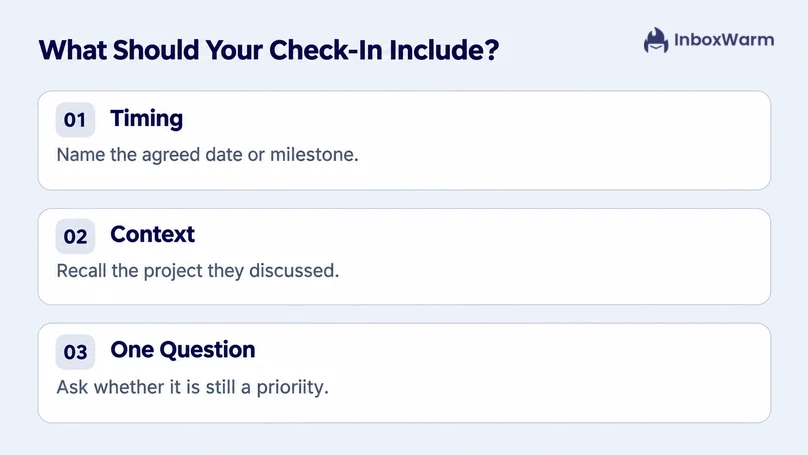
- Why you’re writing now. “You asked me to reconnect after your March planning session.”
- What they wanted to solve. Use a detail they shared, such as reducing time spent chasing onboarding approvals.
- One question they can answer. Ask if it’s still a priority, if the timing moved, or whether a resource they requested would still help. Ask for a meeting if that was the agreed next step.
If you only discussed a possible issue, ask whether it still matters before suggesting a solution. InboxWarm’s prospect needs validation templates that include a priority-check question you can adapt.
3 “Check Back Later” Follow-Up Email Templates
Choose the template that matches what the prospect actually asked for. Keep the original subject line when you’re replying in the same thread.
1. Follow-Up Email When the Prospect Gave You a Date or Month
Use this when the date has arrived, or you’re within the window they gave you.
2. Follow-Up Email After a Budget Review, Renewal, or Launch
Use this when a milestone was meant to inform the next step. A question about timing lets the buyer tell you if their plans changed.
3. Final Follow-Up Email When the Prospect Didn’t Reply
After the agreed check-in goes unanswered, you can stop there or send one closing note if it would help clarify where things stand. Keep it in the same thread.
2 Filled-In Examples of a Check-Back-Later Email
These fictional examples show two different reasons to follow up. One buyer picked a time to revisit the project. The other tied it to a budget decision.
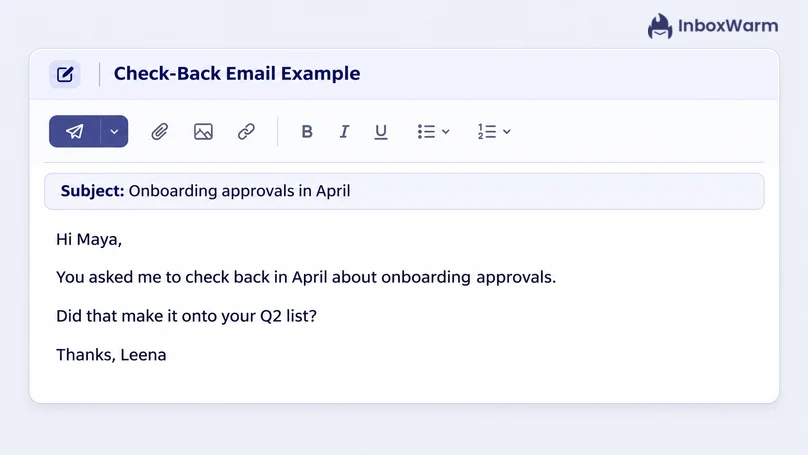
Example 1. Checking Back in the Agreed Month
Maya asked Leena to reconnect in April, once her team had set its quarterly priorities.
Example 2. Reconnecting After a Budget Review
Daniel asked Omar to follow up in June after a finance review. Omar knows what Daniel wanted to evaluate and leaves room for the schedule to have shifted.
What Should You Do if the Prospect Asks You to Check Back Again?
If they share a new date or event, confirm it and update your reminder. If they say “later” again, ask once whether they’d prefer to pause. Your reply can be as simple as “Happy to give you more time. Would you prefer to reach out if this becomes a priority?”
If they ask for something they can use to move the work forward, send the specific item they need. For example, you could share a worksheet that helps them compare pilot costs before the next budget conversation. InboxWarm’s resource-first email templates explain how to describe what the worksheet helps them do.
Subject Lines for a “Check Back Later” Email
For a new thread, name the project and use the buyer’s timing or milestone if it helps them recognize the conversation.
- [Project] in [Month]
- [Project] after [Milestone]
- Timing for the [Use Case] pilot
- Is [Project] still on the [Quarter] list?
Will Your Prospect See the Follow-Up They Asked For?
You waited until the date they gave you. If your follow-up lands in spam, the prospect may never see it. Use InboxWarm to start warming up your inbox before the day you agreed to reconnect.
Frequently Asked Questions
Use these answers to handle early updates, unanswered check-ins, and scheduling links.
How Long Should You Wait Before Following Up?
Use the date, month, or milestone the prospect gave you. If they said “later” without a timeframe, ask when you first reply. If they leave the timing open, pause and let them reopen the conversation.
Can You Follow Up Early if You Have Something Useful?
Send an early update if they asked for it or gave you permission to share it. For example, if they wanted a worksheet before a budget review, send it by the agreed date and keep the later check-in as planned.
Should You Reply in the Same Email Thread?
Use the original thread if it contains the invitation to follow up and the subject still fits. If you start a new email, name the project and remind the buyer when they asked you to reconnect.
How Many Follow-Ups Should You Send if They Don’t Reply?
After the agreed check-in, one optional closing note is enough for most situations covered here. Follow any specific arrangement you made, and stop after a decline or opt-out.
Should You Include a Calendar Link in a Check-Back Email?
Use a scheduling link when the buyer has agreed to a meeting and needs a way to choose a time. If you’re still confirming whether the project is active, ask that question first.
