
TL;DR
- Open with one shared detail, such as a project, team, or lesson from your time together.
- Give a genuine reason for reaching out. A new role, a shared memory, or a brief update can all work.
- Match the next step to the relationship. A question they can answer by email is often enough.
- If you have a specific favor in mind, say so and give them an easy way to decline.
- If a reply matters, send one short follow-up in the same thread. A simple congratulations or hello can stand on its own.
To reconnect with a former colleague by email, mention one thing you worked on together, explain what prompted you to reach out, and offer one easy way to reply. If you haven’t spoken in years, “I was thinking about the onboarding checklist we built at Northline. How have things been with you?” gives them a starting point.
The templates below cover a long gap, a new role, and a former manager or mentor. The filled-in example uses a shared project as the opener when there’s no recent news to mention.
Table of Contents
What Should You Say When Reconnecting With a Former Colleague?
Use a detail they’ll recognize and connect it to why you’re writing today. If you worked together briefly, name your old team or company early so they can place you. If you were close coworkers, a shared memory and a simple question may be enough.
- Remind them how you know each other. “We worked on the onboarding project at [Company]” is clearer than “I hope you remember me.”
- Say why you’re writing now. A lesson you still use, a career update, or a recent milestone gives the email context.
- Make it easy to reply. Ask how things are going, offer to catch up, or make one specific request. Choose one for the first message.
If a mutual coworker offers to reconnect you, a short, forwardable introduction note can give them the context without asking them to write the message themselves.
Which Email Template Should You Use to Reconnect?
Pick the template that matches your reason for writing. Replace the placeholders with details you remember or can verify, and use the tone you’d naturally use with that person.
How Do You Catch Up After a Long Gap?
Use a shared project or memory to reopen the conversation. Acknowledge the gap once if it feels natural, then give them something specific to respond to.
How Do You Reconnect When a Former Colleague Starts a New Role?
Congratulate them on the move if they’ve shared it publicly or told you directly. Mention something you genuinely remember about their work and let the congratulations stand on its own if that’s your reason for writing. The University of Texas at Dallas Career Center includes relevant updates and congratulations among ways to stay in touch with professional contacts.
How Do You Reconnect With a Former Manager or Mentor?
Tell them which piece of advice stayed with you and where you’ve used it. If you’d like to talk, give them an idea of what you want to catch up on.
What Can You Write After Two Years Without Contact?
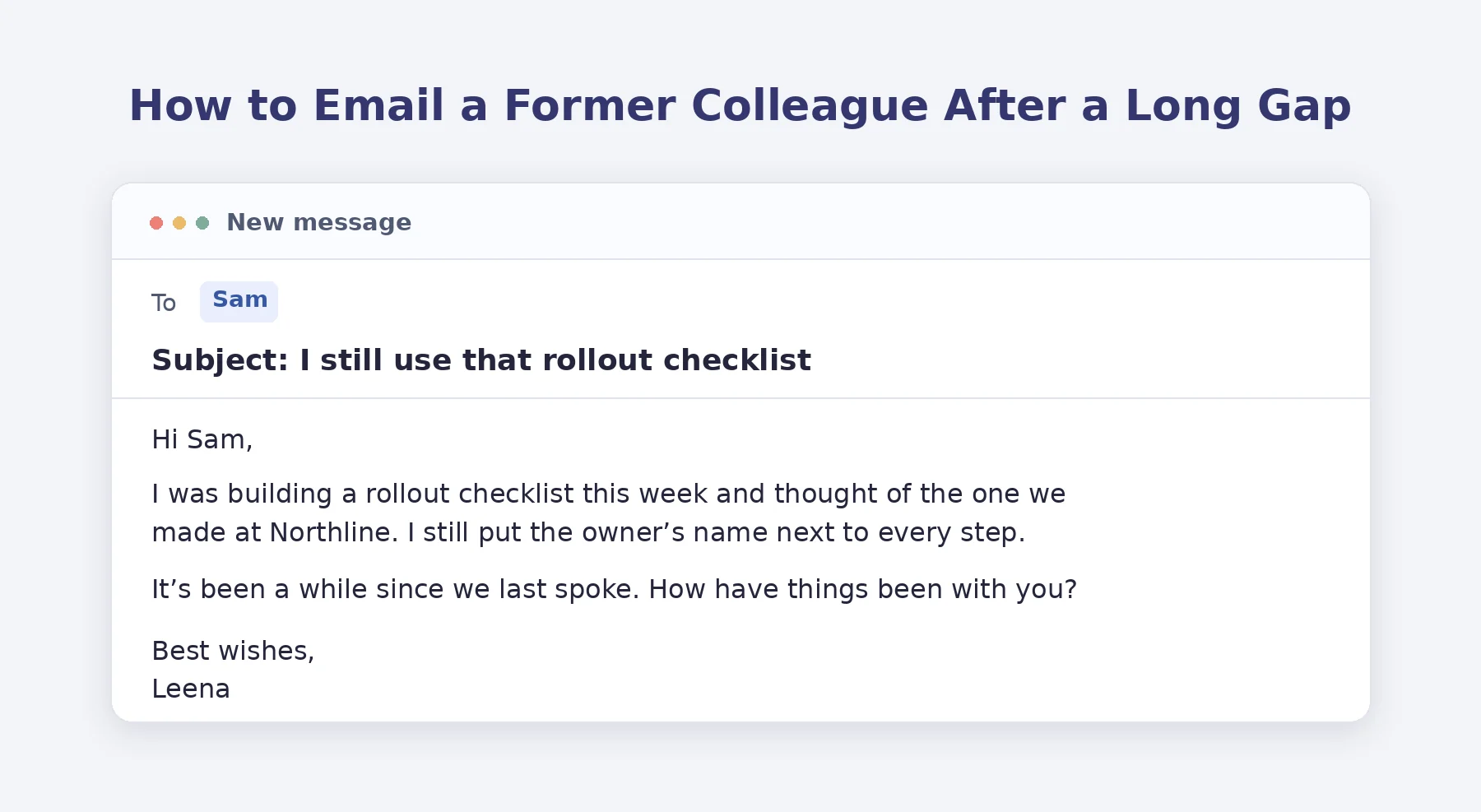
A shared detail is enough when there’s no recent news. This fictional example shows how a project from two years ago can lead to a warm, specific email.
The checklist gives Sam a detail to remember and an obvious topic to reply to. The sender doesn’t need a promotion, a job opening, or a meeting request to justify writing.
What Subject Lines Work for a Reconnecting Email?
Use a subject that names the shared project, company, or news. If you saw them recently, use the event name and one detail from your conversation, as you would in a post-event follow-up.
| Reason for writing | Subject line |
|---|---|
| Catching up after a gap | Thinking About Our Time on [Team] |
| Remembering a shared project | I Still Use That Rollout Checklist |
| Congratulating them | Congratulations on Joining [Company] |
| Sharing an update with a mentor | An Update Since Our Time at [Company] |
| Making a specific request | A Question About [Role] at [Company] |
Should You Mention a Job Search or Referral?
If a job opening is the reason you’re reaching out, say so. Remind them how you worked together, name the role, and make a request that fits how well they know your work. For example, “I’m considering the implementation specialist role at [Company]. Since we worked on onboarding together, would you be comfortable sharing what the team looks for in that role?”
If they can speak to your work and you want a referral, ask directly and make it easy to decline. UT Dallas Career Center’s networking guidance recommends considering whether the person knows you well enough to vouch for your abilities.
How Do You Follow Up if They Don’t Reply?
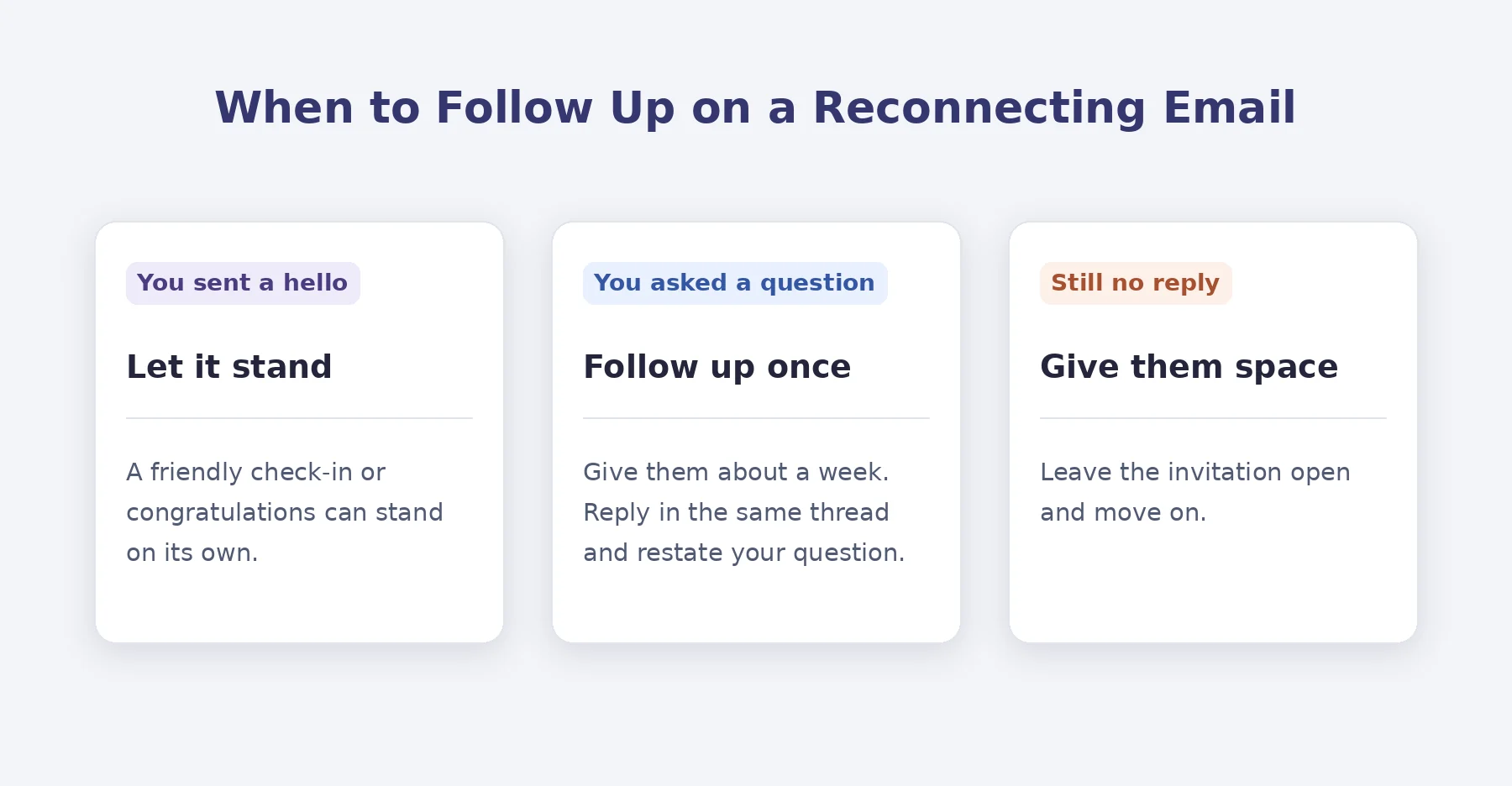
A catch-up message can stand on its own. If you asked a specific question or invited them to meet, give them about a week, then reply once in the original thread. If you still hear nothing, leave the invitation open and move on.
Frequently Asked Questions
Is It Awkward to Email a Former Coworker After Years?
It can feel awkward to start. One recognizable detail and a sincere reason for writing help the recipient understand why you thought of them.
Is Email or LinkedIn Better for Reconnecting With an Old Colleague?
Use the channel you previously used if it still works. LinkedIn is practical if you only have an old work address. Keep the message short and mention how you know each other.
Should You Apologize for Losing Touch?
A simple “It’s been a while” is enough in most cases. If you missed a commitment or owe them a reply, acknowledge that specifically.
Can You Reconnect Without Asking for Anything?
Yes. A brief hello, a sincere congratulations, or a note about how you used their advice is a complete message on its own.
Should You Suggest a Call in the First Email?
Suggest a call when you already had a comfortable working relationship or have a clear reason to talk. After a long gap, one straightforward question gives them an easier way to respond.
Check Your Subject Line Before Sending
Use a subject your former colleague will recognize. It should match what you wrote inside the email.