
TL;DR
- Use an informational interview to learn about one role, industry, or career decision from someone with firsthand experience.
- Choose a person who has done the work you’re exploring. Mention one verified detail that explains why you contacted them.
- Write a subject line that names the role, career move, or connection. Introduce yourself briefly and ask for a conversation about one specific question.
- If they agree, offer two times with your time zone. Prepare a few questions and start with the one from your email.
- If there’s no reply, send one brief follow-up in the same thread after about a week. If it goes unanswered, move on.
- Send a thank-you email within a day or two. Mention one thing you learned and how you plan to use it.
An informational interview can help you decide whether a role is worth exploring. If you’re moving from customer support to customer success, for example, a short conversation can show you where your experience transfers and what you’d still need to learn.
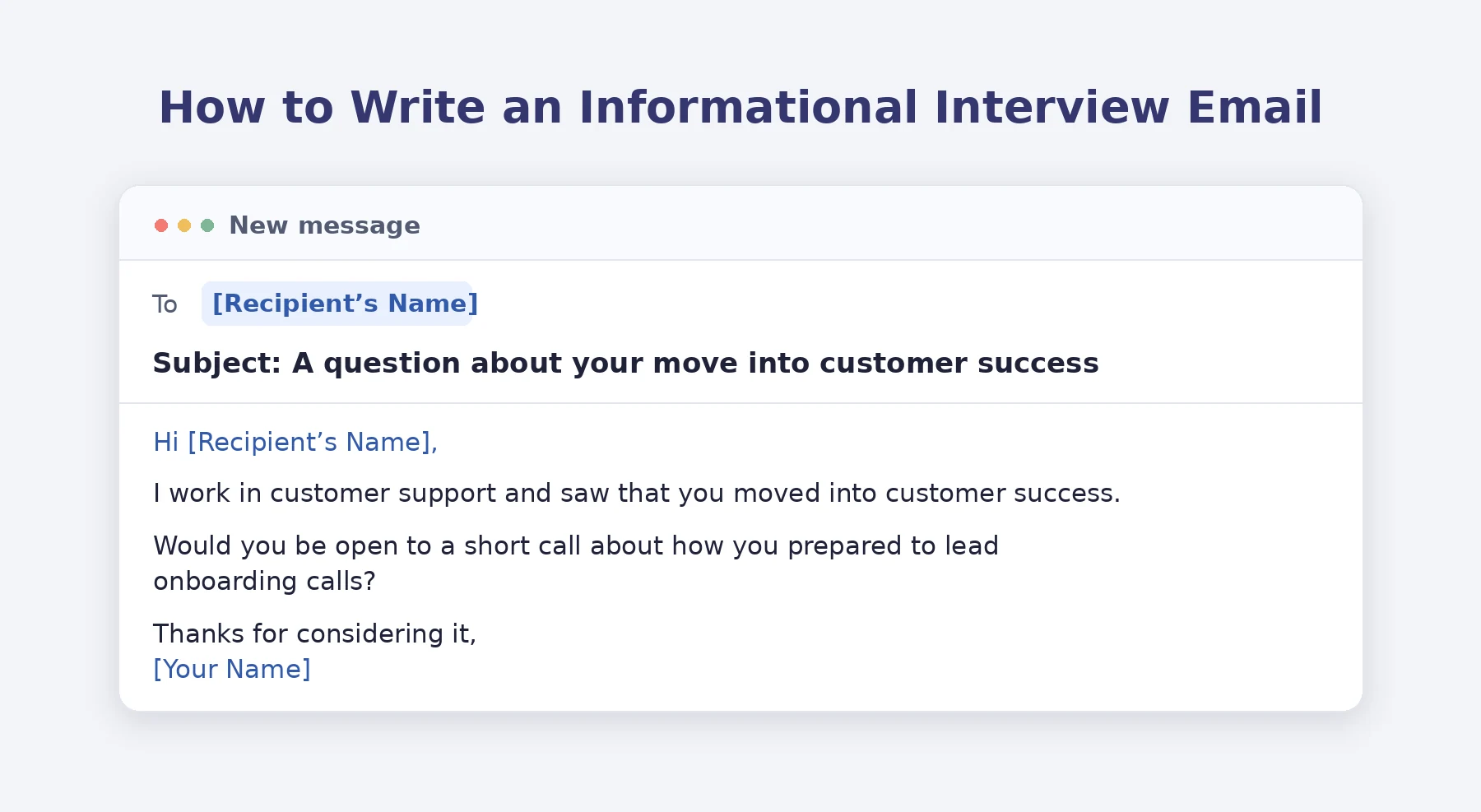
To ask for an informational interview by email, introduce yourself in one sentence, explain why you chose that person, and invite them to a short conversation about one specific topic. For example, “Would you be open to a short call about how you moved from customer support into customer success?”
Table of Contents
What Should You Write in an Informational Interview Request Email?
What Is an Informational Interview?
An informational interview is a brief conversation with someone who has firsthand experience in a role, company, or industry you’re exploring. The purpose is to understand the work and make a more informed career decision. UC Berkeley Career Engagement recommends keeping the conversation focused on learning about the work and respecting the time you agreed to.
When you only need one recommendation, asking for advice in a short email gives the recipient an easier way to answer. Request a call when you want to hear how they handled a career decision and ask a follow-up about their experience.
How Do You Ask for an Informational Interview by Email?
- Find someone who can answer your question from experience. If you want to know what the first year in a role feels like, someone who made the move recently may remember which parts were hardest to learn.
- Explain why you chose them. Use one verified detail, such as a career transition on their LinkedIn profile. When you find the person through a company careers page or team interview, personalize the opening with a verified detail from your company research and connect it to the question you want to ask.
- Name what you want to learn. Replace “I’d love to pick your brain” with a question such as “How did you show hiring managers that your support experience prepared you to lead onboarding calls?”
- Ask for a short call. Ask for a short call and let them suggest a time that works for them. In a first email, your role and reason for reaching out are usually enough context. Share your résumé if they ask for it.
- Keep the request focused. Save questions about openings, referrals, or portfolio feedback for a separate conversation if the recipient offers to help.
Who Should You Ask for an Informational Interview?
Choose someone whose experience matches the decision you’re making. If you want to know how to get started, ask someone who moved into the role recently. If you’re comparing how the role works across teams, ask someone who has held it at more than one company.
For example, a support specialist weighing a move into customer success could contact someone who made the same switch and now leads onboarding. A useful question would be, “Which part of onboarding took the longest to learn after you moved from support?” If a colleague knows someone with that background, ask for a mutual introduction and give your colleague a short note they can forward.
What Are Good Subject Lines for an Informational Interview Email?
A good subject line names the role, career move, or connection that explains why you’re writing. “From Customer Support to Customer Success” gives the recipient enough context to recognize the topic before opening the email.
| Situation | Subject line |
|---|---|
| Switching roles | From Customer Support to Customer Success |
| Exploring a new industry | A Question About Health Tech Operations |
| Contacting an alumnus | Fellow [School] Grad Exploring [Role] |
| Referring to published work | Your Talk on Moving Into UX Research |
| Reaching out after an introduction | Thanks for Connecting, [Recipient’s Name] |
After a mutual introduction, reply in the original thread so the recipient can see who connected you.
What Does an Informational Interview Email Look Like? 3 Examples
Match your email to what you need to learn. Ask a career changer about skills that carried over, someone in a new industry about a specific part of the work, or a professional you follow about a project they’ve discussed publicly. These examples use fictional names and situations.
How Do You Email Someone Who Made a Similar Career Change?
Use this email when the person has moved from a role like yours into a role you’re considering.
How Do You Request a Conversation About a New Industry?
Use this version when you know the kind of work you enjoy and want to understand how it translates to another industry.
How Do You Reach Out to Someone Whose Work You Follow?
Use this version when a talk, project, or article helped you identify a career question you’d like to discuss.
How Do You Follow Up on an Informational Interview Request?
What Should You Send if They Haven’t Replied?
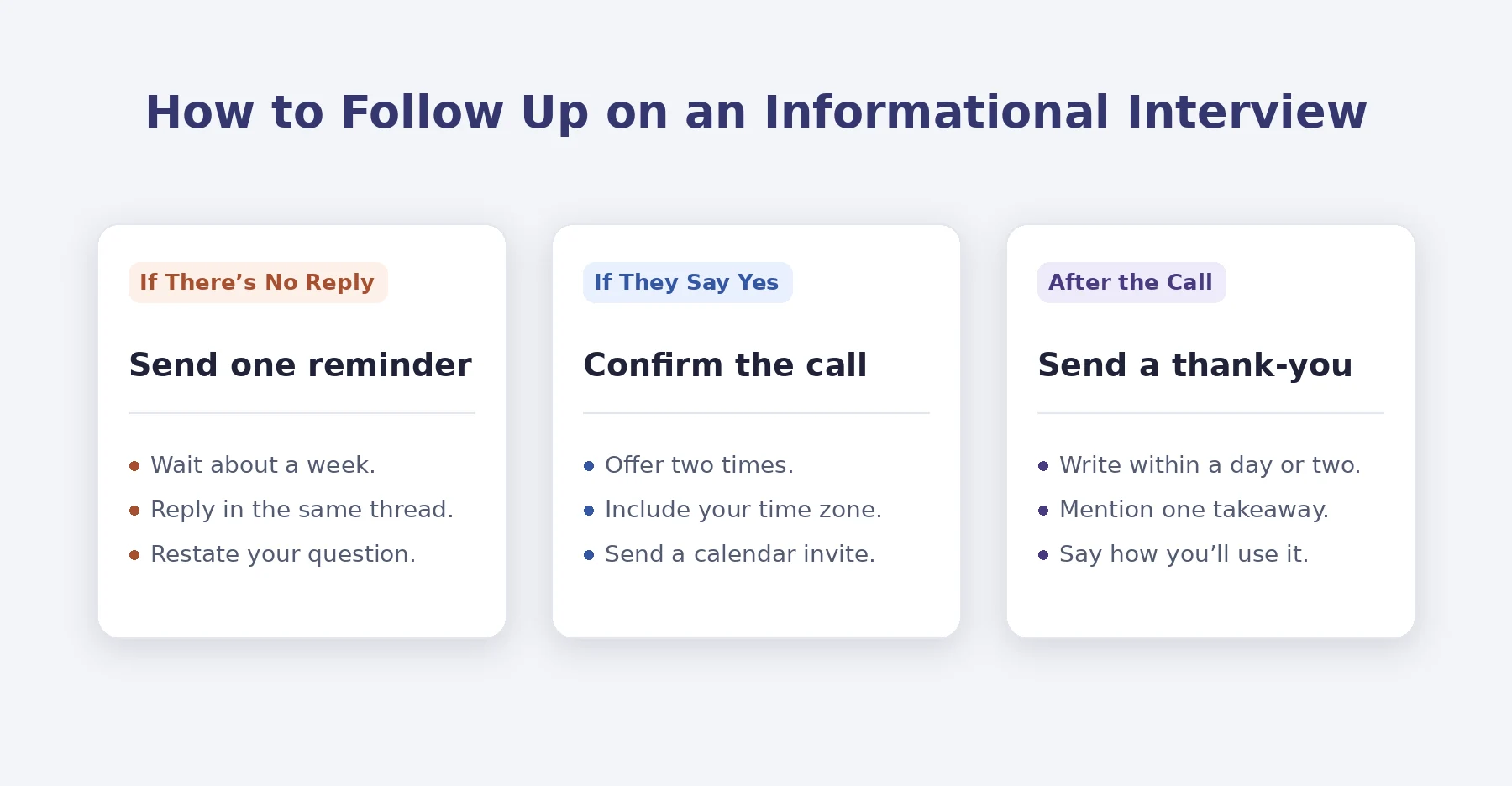
Give the recipient about a week, then send one short follow-up in the original thread. Mention the topic and the request for a short call so they can respond at a glance. UC Berkeley’s networking guidance suggests allowing about a week before following up. If your reminder goes unanswered, move on.
How Do You Schedule the Call Once They Say Yes?
Offer two times with a time zone, confirm how you’ll meet, and send a calendar invite once you’ve agreed on the details.
Prepare two or three questions and start with the one from your email. Yale’s Office of Career Strategy recommends questions that invite people to describe specific experiences. If they tell you a skill mattered, ask when they first used it on the job. Here are three questions for a career-change conversation.
- Which skills from your previous role did you use in your first few months?
- What part of the job surprised you once you started doing it?
- What small project would help someone decide if they’d enjoy this work?
What Should You Write in an Informational Interview Thank-You Email?
Send a thank-you email within a day or two, as UC Berkeley Career Engagement recommends. Name one thing you learned and explain how you plan to use it. If they offered to send a resource or introduce you to someone, acknowledge the offer and thank them for their time.
Frequently Asked Questions
Can You Ask Someone You’ve Never Met for an Informational Interview?
Yes. Briefly introduce yourself, explain how you found them, and point to one experience that makes their perspective relevant. A specific reason for writing gives a new contact enough context to consider your request.
How Long Should an Informational Interview Request Email Be?
Aim for three short paragraphs: who you are, why you chose them, and what you’d like to discuss. Read it once on your phone to see whether the topic and time request are easy to spot.
Can You Request an Informational Interview on LinkedIn?
Yes. If LinkedIn is where you found the person, you can send a short message there. For example, “Hi [Recipient’s Name], I saw you moved from [role] into [field]. I’m exploring a similar transition. Would you be open to a short chat about which skills carried over?”
Should You Send a Scheduling Link in the First Email?
Start by asking if they’re open to a call. Once they agree, offer two times or share a scheduling link if it makes coordinating easier.
What If You Met the Person at an Event?
Start your post-event follow-up email by naming the event and one topic you discussed. For example, “I enjoyed our conversation about your first year in health tech at the operations meetup. Would you be open to a short call about how you prepared for the move?”
Check Your Subject Line Before Sending
Read your subject line as the recipient would. It should tell them what the email is about and match the request inside.