

TL;DR
- Check the invite, meeting link, and time zone before assuming someone missed the meeting.
- Send a short note the same business day. If you missed the meeting, apologize as soon as you realize it.
- Name the reason for the call and offer two times with a time zone, or share one booking link if schedules are complicated.
- If the first rescheduling email goes unanswered, send one brief reminder when the meeting is still relevant. Leave the conversation there if they decline or stay silent.
A missed sales call or demo puts you in an awkward spot. You still want to talk, but a note that sounds like a reprimand can make it harder to restart the conversation. A good follow-up email after a missed meeting names the original topic, gives the recipient an easy way to reschedule, and leaves room for their plans to change.
Table of Contents
When Should You Send a Follow-Up Email After a Missed Meeting?
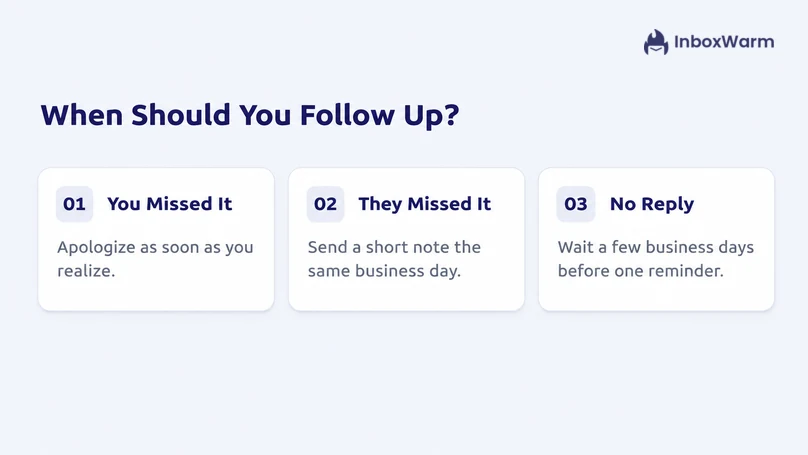
Send a short email the same business day, once you’ve checked that the calendar invitation showed the correct time, time zone, and meeting link. If you missed the meeting yourself, send an apology as soon as you realize it and correct any scheduling mistake before sending a new invite.
If nobody replies to your first note, a few business days is a reasonable starting point for one reminder if the meeting still makes sense. A deadline or a date you already agreed on can change when you reach out.
If prospects from the same outreach campaign often go quiet, check why your cold emails are getting few replies before adding more reminders. Start by checking whether the original email gave prospects a clear reason to meet.
What Should a Missed Meeting Follow-Up Email Include?
The recipient should be able to tell in a glance what the meeting was for and how to book another time. Keep the email short enough to answer on a phone.
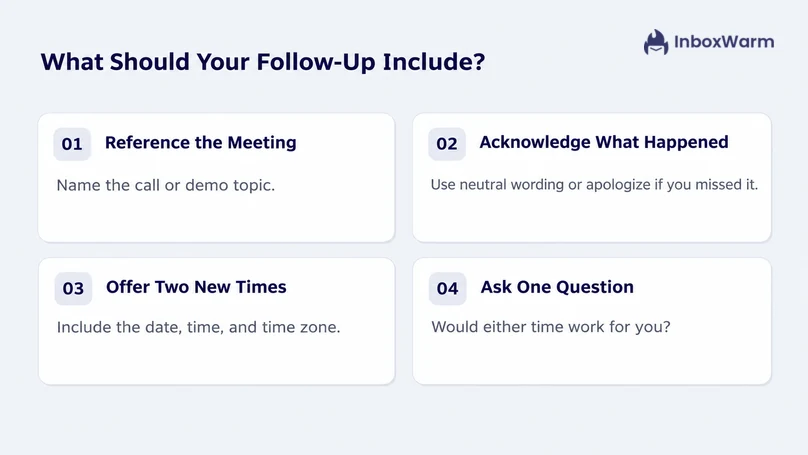
- Reference the meeting. Mention the topic or use case they expected to discuss.
- Describe what happened plainly. “We didn’t get a chance to connect” works when you don’t know why the other person missed it. If you missed the meeting, say so and apologize.
- Make rescheduling easy. Offer two times with the date and time zone. Use one booking link if coordinating several calendars would take more back-and-forth.
- Ask one question. “Would either time work for you?” gives the recipient a clear way to answer.
Which Missed Meeting Follow-Up Email Template Should You Use?
Choose the template based on who missed the meeting and whether you’ve already asked to reschedule. Replace the brackets with details from the original invite or conversation.
1. The Prospect Missed a Sales Call
Use this for a first missed call when you still have a clear reason to meet.
2. The Prospect Missed a Product Demo
Mention the specific feature or workflow they wanted to see so they can decide whether the demo is still worth their time.
3. You Missed the Meeting
Send this as soon as you realize you missed the call. If you sent the wrong link or time, say what you’ll correct in the new invite.
4. Your Rescheduling Email Went Unanswered
Use this after a few business days if the meeting is still relevant. Send it in the same thread so the recipient can see the original context.
What Does a Missed Demo Follow-Up Look Like in Practice?
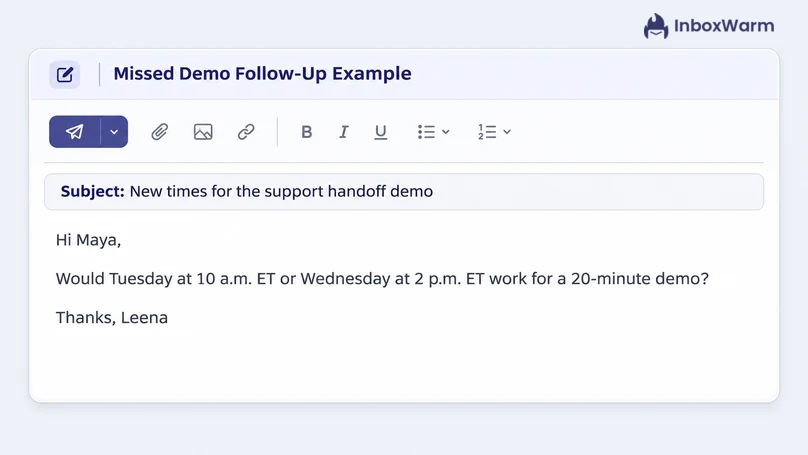
In this fictional example, Maya booked a demo to see how support handoffs work. The sender names that use case and offers two available times in Maya’s time zone.
Once the buyer picks a time, send a fresh invite with the confirmed time zone and joining link. After the rescheduled meeting takes place, a short recap can confirm what you agreed and give the buyer a clear next step. See how that works in these sales follow-up email templates.
What Subject Line Should You Use After a Missed Meeting?
Reply in the original scheduling thread if the recipient can easily recognize it. If you start a new thread, name what you planned to discuss and make the rescheduling request clear.
- Rescheduling our [Meeting Topic] call
- New times for the [Use Case] demo
- Can we find another time for [Meeting Topic]?
Frequently Asked Questions
Use these answers to decide how to word the first note, offer a new time, and handle a second unanswered message.
How Do You Politely Say Someone Missed a Meeting?
Try “We didn’t get a chance to connect for our [Meeting Topic] call today.” Then ask whether they’d like to pick another time.
Should You Apologize in a Missed Meeting Email?
Apologize directly if you missed the meeting or sent incorrect scheduling information. If you don’t know why the other person didn’t join, acknowledge that you didn’t connect and offer to reschedule.
Should You Offer Two Times or Send a Scheduling Link?
Offer two times, with a time zone, if you already know the recipient’s availability or need a simple reply. A single scheduling link can help when there are several calendars or time zones to coordinate.
What If the Prospect Misses the Rescheduled Meeting Too?
If you’re unsure whether the topic is still a priority, ask if they’d prefer to pause. Leave the next booking to them if the second meeting also passed without a reply.
Should You Send a Third Email if They Don’t Reschedule?
Usually, a first rescheduling note and one brief reminder are enough. Follow up again only if there’s a new reason to write or a next step the recipient explicitly agreed to. Stop after a refusal or opt-out.
Need to Rebook Without Sounding Pushy?
If you’re starting a new thread, use InboxWarm to review your subject line. Name the call or demo so the recipient can tell at a glance why you’re writing.
