


TL;DR
- Refer to one specific piece of the expert’s work and explain how it relates to a decision you’re making.
- Ask one question that can be answered in a short email reply.
- Share what you’ve tried or the two options you’re weighing so the recipient has enough context.
- Send one polite follow-up in the original thread if the question is still relevant.
- Thank them for the specific advice they shared.
To ask an industry expert for advice by cold email, tell them why you chose to write to them, give enough context to understand your decision, and ask one focused question. If someone wrote about SaaS onboarding, for example, ask what they would measure first when trial users sign up but never complete setup.
Start with the reusable template, then choose a filled-in example that fits your situation. The sample emails are fictional and show how to turn a broad request into one question the recipient can answer.
Table of Contents
What Should You Write in a Cold Email Asking for Advice?
Use this template when you can identify a specific idea from the expert’s work and explain where you’re trying to apply it.
How Do You Make Your Question Easy to Answer?
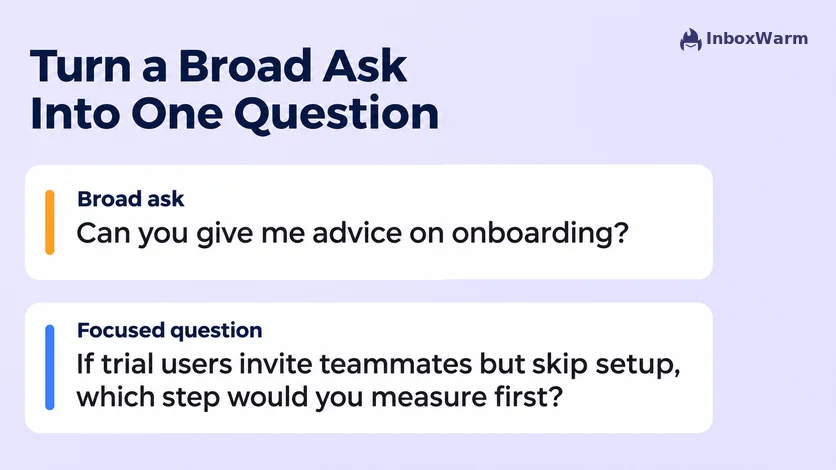
Ask for advice on one decision. State what you’ve tried and include the constraint that could change the recommendation. If you need to describe several problems to make the question understandable, choose one to start with.
| Broad Ask | Focused Question |
|---|---|
| Can you give me advice on onboarding? | If trial users invite teammates but skip setup, which step would you measure first? |
| Can you look over our pricing page? | For a product sold to small teams, where would you explain seat limits on the pricing page? |
| Any tips for moving into product marketing? | For a writer moving into product marketing, which would you build first: a positioning sample or a launch brief? |
3 Cold Email Examples for Asking an Industry Expert for Advice
Choose the example that matches your reason for writing. You can ask how to apply an idea, get a perspective on two options, or request one place to start learning.
1. Ask How to Apply Something They Published
2. Ask for a Perspective on Two Options
3. Ask for One Resource to Get Started
A Complete Advice Request About SaaS Onboarding
In this fictional example, Leena is choosing where to investigate a drop-off in trial onboarding. She asks Dev about one decision he discussed in a public talk.
Dev can answer from experience without opening an attachment or reviewing Leena’s funnel. The question makes the two options and the reason for asking clear.
If your reason for reaching out is to contribute a relevant checklist or example of your own, use a cold email that offers a useful resource. Describe what you can share and how it relates to the recipient’s work.
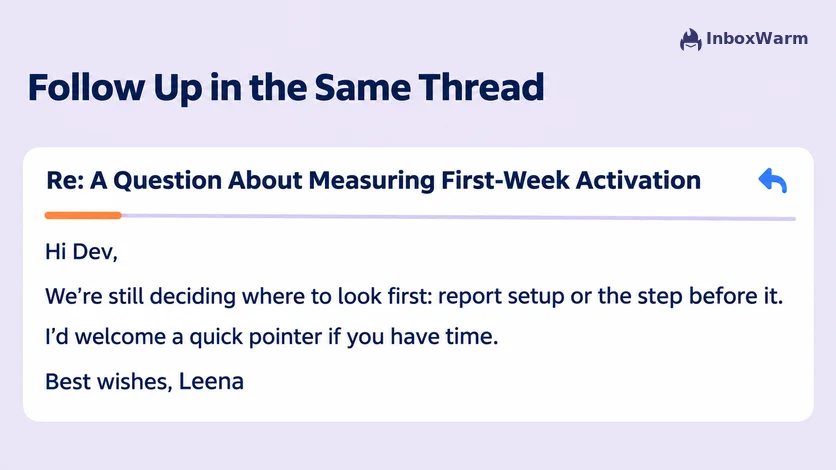
How Do You Follow Up on an Unanswered Advice Request?
If the question is still open after about a week, reply in the original thread. Bring the decision back into focus in one sentence. One follow-up is enough for this kind of request.
If several people are skipping your emails, check whether your opening explains why you chose each recipient and whether your question fits their experience. The same checks appear in our guide to diagnosing low cold email reply rates.
What Should You Check Before Sending?
- Confirm the expert’s name and the title of the work you mention.
- Check whether the expert has already answered your question publicly.
- Keep one question and one clear reason for choosing this person.
- If you want a detailed review, ask whether they offer paid advisory time.
- Thank them for any advice, resource, or referral they share.
Frequently Asked Questions
How Do You Cold Email an Industry Expert for Advice?
Mention one specific thing the expert has published, explain the decision you’re facing, and ask one question they can answer briefly. Thank them for their time and include your name and role.
What Is a Good Subject Line for an Advice Request?
Name the decision or topic. “A question about your onboarding talk” or “Advice on measuring first-week activation” gives the recipient enough context to decide whether they can help.
Should You Ask for a Call or an Email Reply?
Ask for a short written reply when you have one defined question. A brief call can make sense if the person has invited calls or the topic needs more back-and-forth. Say what you want to discuss and how much time you are requesting.
How Long Should an Advice Request Be?
Aim for two short paragraphs and a simple sign-off. Give the expert enough context to answer without reading a deck, reviewing your work, or asking what you are trying to decide.
What If the Expert Doesn’t Reply?
If the question is still relevant, send one brief follow-up in the original thread about a week later. Then leave it there. If they refer you to an article or paid service, acknowledge the recommendation and decide whether it fits.
How Do You Thank an Expert for Their Advice?
Name the suggestion that helped and explain how you plan to use it. Keep the thank-you brief and avoid adding a new request. If you later have a result that would be useful to them, send a short update.
Before You Send Your Advice Request!
You’ve narrowed your ask to one clear question. Before you email the expert, check your sending domain for authentication issues that could affect delivery.
