

TL;DR
- Use the buyer’s agreed review date to decide when to follow up.
- Reply in the proposal thread and name the project so the buyer can find it quickly.
- Ask one question about the review, a known concern, or the decision timeline.
- If the proposal is on hold, agree on a new date or close the loop politely.
After sending a sales proposal, follow up on the date you agreed with the buyer. Name the proposal, refer to the last thing you discussed, and ask one question that moves the review forward. For example, if the buyer planned to review the scope on Thursday, ask whether they had a chance to review that section and what still needs clarification.
Use the templates below to check on a review, address a specific concern, confirm a decision date, or close the loop. Each starts from what the buyer has told you.
Table of Contents
When Should You Follow Up After Sending a Proposal?
If the buyer gave you a review or decision date, use it. Follow up on that date or the next business day, depending on what you agreed. If no date was set, a few business days can be a starting point for a short check-in. For a formal request for proposals, follow the communication instructions and timeline in the request. PandaDoc’s proposal management guide also recommends checking the selection timeline before following up.
If the buyer says the decision has moved to next month, ask whether they’d like you to reconnect then and record the new date. That gives you a reason to follow up when the timing is right.
What Should a Proposal Follow-Up Email Include?
Remind the buyer which proposal you sent, refer to the last thing you discussed, and ask one question they can answer quickly. If the buyer is sharing the proposal internally, include the link so they can find and forward it.
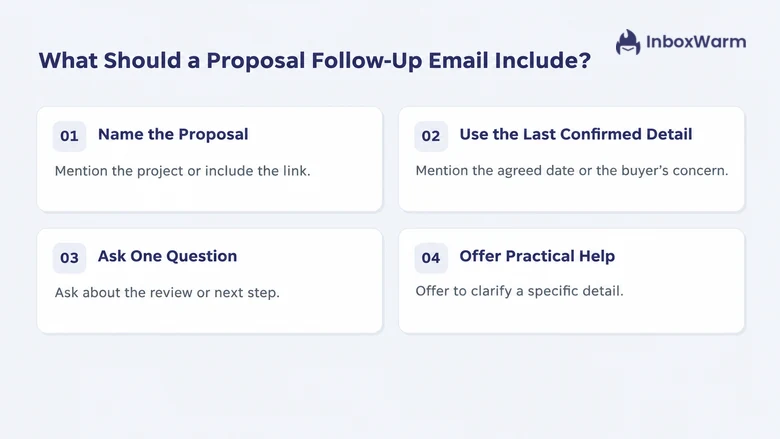
- Name the proposal. Reference the project and, if it helps the buyer locate the document, include the date or proposal link.
- Use the last confirmed detail. Mention the review date, the buyer’s question, or the decision they were preparing to make.
- Ask one question. Check whether they reviewed it, whether a known concern is resolved, or when they expect to decide.
- Offer practical help. If a section needs clarification, point to it and offer to explain or revise it.
If the buyer is still evaluating the offer, check which detail would help them decide. Keep the rest of the sales follow-up options for other stages of the conversation.
Which Proposal Follow-Up Email Template Should You Use?
Choose the template that fits where the buyer left the conversation. Ask for a review update if the proposal is still with them, answer a concern they raised, confirm a decision date, or close the loop if you’ve already followed up and heard nothing back.
1. Check Whether the Buyer Reviewed the Proposal
Use this when the review date has passed or when you haven’t agreed on a review date.
2. Address a Concern the Buyer Raised
Use this when they named a specific concern and you can respond with confirmed information.
3. Confirm the Decision Timeline
Use this when the buyer said the proposal was under review and shared an expected decision date.
4. Close the Loop if the Proposal Has Stalled
Use this after a reasonable follow-up has gone unanswered and there’s no agreed next step. If the buyer has already declined or opted out, stop.
What Does a Proposal Follow-Up Email Look Like in Practice?
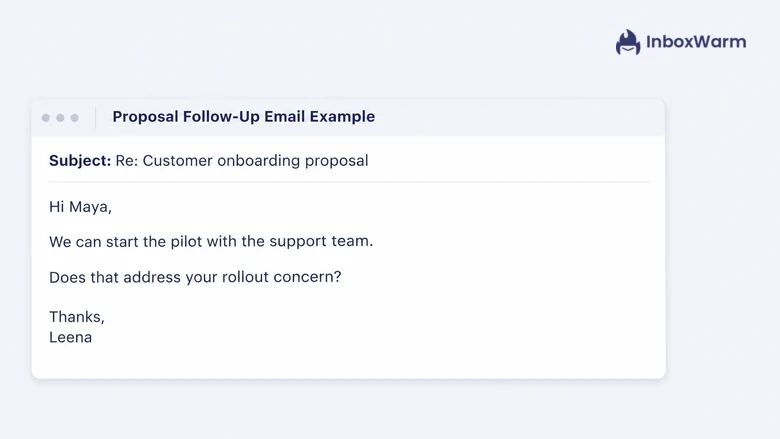
In this fictional example, the buyer asked whether the new workflow could launch with one pilot team. The sender follows up with the answer and asks one question about the remaining concern.
What Subject Line Should You Use for a Proposal Follow-Up?
Reply in the original thread when you’re continuing the same conversation. If you need a new thread, name the project and give the buyer a reason to open it.
- [Project Name] Proposal Review
- Updated Pilot Scope for [Project Name]
- [Project Name] Proposal Decision Timing
Frequently Asked Questions
Here’s how to handle common questions about proposal follow-ups, including when to resend the proposal and what to do if the buyer hasn’t replied.
Should You Resend the Proposal in Your Follow-Up?
Reply in the original thread so the buyer can find it. Include the link again if access is an issue. If you changed the proposal, point to the latest version and tell them what changed.
What If the Buyer Hasn’t Reviewed the Proposal Yet?
Ask when they expect to review it and offer to clarify one area they flagged. Use their answer to set your next follow-up date.
How Many Times Should You Follow Up on a Proposal?
Use the buyer’s review timeline and the relevance of your update to decide. When there’s no reply, no agreed next step, and nothing useful to add, close the loop or stop.
Should You Offer a Discount if the Buyer Goes Quiet?
Ask if the timeline or priorities have changed. If the buyer confirms a budget concern, discuss scope or pricing options that you can actually offer.
What If the Buyer Says They Need More Time?
Thank them and ask when it would make sense to check back. Note the new date and any information they need before then.
Sent the Proposal and Still Waiting?
When a buyer goes quiet, it’s hard to follow up without feeling pushy. If you’re starting a new thread, use InboxWarm to check that your subject line makes the project and your reason for following up clear.
