
TL;DR
- Send a follow-up a day or two after the event while the conversation is fresh.
- Name the event and recall one detail that helps the recipient remember you.
- Send anything you promised. If there’s a reason to keep talking, suggest one simple next step.
A good follow-up email after a networking event reminds the recipient where you met, picks up one detail from your conversation, and gives them a clear reason to read or reply. If all you wanted to say was thank you, a short note is enough.
Choose one of the five templates below based on what happened at the event. If you arranged the conversation using a pre-event networking email, you can reply in that thread so the recipient has the context. Product Forum and the people in these examples are fictional.
Table of Contents
What Should You Write in a Networking Follow-Up Email?
Begin with the event and where you crossed paths. Then mention a specific topic, question, or recommendation. Close by sending what you promised, asking one question, or simply thanking the person for their time.
Instead of “It was great networking with you,” try “I enjoyed comparing notes on trial milestones over coffee at Product Forum.” The session or setting helps the recipient place you, and the topic gives them a reason to keep reading.
5 Follow-Up Email Templates for After a Networking Event
Each template includes a subject line and a filled-in example. Replace the placeholders with details you remember and choose a next step that fits the conversation you had.
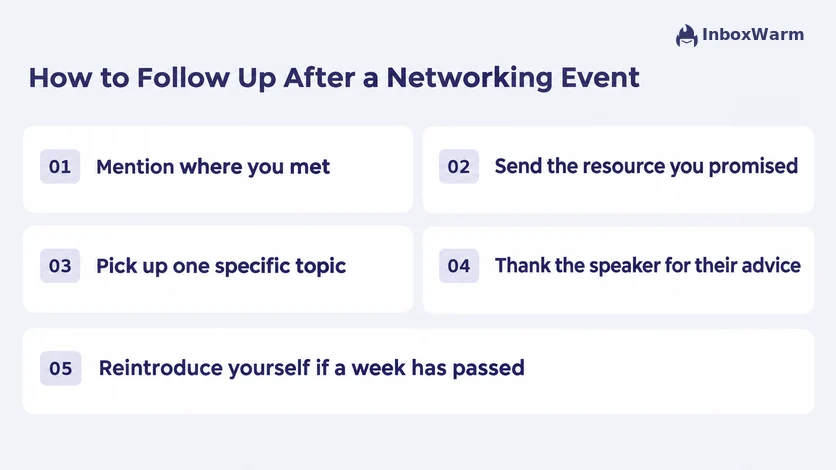
1. Stay in Touch After a Brief Conversation
Use this when you had a good conversation and parted without making a plan.
2. Send a Resource You Promised
Put the link or attachment near the top. Add a line that tells the recipient where to look.
3. Pick Up a Specific Discussion
Use this when you both had more to say about a topic. Ask one focused question or suggest a brief call if you already discussed having one.
4. Thank a Speaker for Advice You’ll Use
Use this when a speaker answered your question or offered advice. Show what you took from it and how you plan to apply it.
5. Reconnect a Week After the Event
Give the recipient a clear reminder of where you met and a reason the conversation is still relevant.
What Are Good Subject Lines for a Conference Follow-Up?
Pick the detail the recipient is most likely to recognize. Use the event name for a new thread, or name the exact resource if you promised to send one.
- Good meeting you at [Event Name]
- The [Resource] I mentioned after [Session]
- Your point about [Topic] at [Event Name]
- Thank you for the advice on [Topic]
What Should You Check Before Sending?
Read the email from the recipient’s point of view. They may have had dozens of conversations that day. A specific detail makes it easier to remember yours.
- Check the spelling of their name and the event or session title.
- Include a detail you actually talked about.
- Open the link or attachment to make sure they can access it.
- Keep one question or next step if the message needs a reply.
If you’re reaching out to a speaker you didn’t talk to, use the event as context and ask a focused question. The guide to asking an industry expert for advice has examples for that first message.
Frequently Asked Questions
When Should You Send a Follow-Up Email After a Networking Event?
Aim for the next day or two while the conversation is fresh. Send a promised resource by the time you agreed on. If a week has passed, mention where you met and why you’re writing now.
What Should the Subject Line Say After a Conference?
Use the event name, the topic, or the item you promised. “Good meeting you at Product Forum” and “The onboarding checklist I mentioned” both tell the reader what to expect.
Should You Reply in the Same Thread or Start a New One?
Reply in the same thread if you used it to arrange the meeting. Start a new thread with a specific subject line if you first met in person and haven’t emailed each other.
How Do You Follow Up With Someone You Briefly Met?
Mention the session, table, or introduction that helps them place you. Add one thing you remember from the conversation and close with a short note if there’s no natural next step.
Should You Follow Up Again if They Don’t Reply?
If you only sent a thank-you or shared a resource, leave it there. If you had discussed a concrete next step, a brief reminder in the same thread can be appropriate.
Review Your Sending Domain Before Following Up
If you’re sending from a work email address, review your domain’s authentication setup before you send your event follow-ups.