

TL;DR
- Open with a specific connection to the recipient’s work.
- Explain your role in one sentence and name the challenge you share.
- Ask one question by email or suggest a short call to compare notes.
- Share a useful observation of your own when it fits.
- Follow up once, about a week later, then give them space.
A cold email to an industry peer should explain what you have in common, why you chose to write to them, and what you’d like to discuss. Start with one real detail about their work and make a request they can answer without doing homework.
Table of Contents
What Should You Say in a Cold Email to an Industry Peer?
Use this template when you’ve found a clear overlap between the recipient’s work and your own. Replace the placeholders with a detail you can verify and a question you’d actually like to discuss.
How Do You Find a Genuine Reason to Reach Out?
Look for something the recipient chose to share publicly, such as a talk, a work example, or a discussion in a professional community. Then connect that detail to a decision you’re making in your own work.
| What You Found | What You Could Ask |
|---|---|
| A talk about shortening customer onboarding | Which step did you simplify first? |
| A post about reviewing accessibility before launch | At what point do you ask someone outside the project to review the page? |
| A community discussion about team handoffs | Which handoff detail do you always document? |
For more ways to turn a public detail into a specific opening line, see our B2B cold email guide. Pick a question the recipient can answer from experience. If the answer would require them to review your materials, pull data, or share confidential information, narrow the question.
3 Cold Email Examples for Networking With Industry Peers
Choose the example that fits why you’re reaching out: ask a quick question, exchange notes on a shared challenge, or follow up on an idea from a public talk. In each email, name what prompted you to write and make one clear request the recipient can answer easily.
1. Ask One Question by Email
Use this when a short written answer would give you enough direction.
2. Exchange Notes on a Shared Challenge
Use this when you can contribute a concrete observation from your own work.
3. Build on an Idea From a Public Talk
Use this when you remember a specific point from a talk and have a related question.
A Filled-In Example for Two Onboarding Leads
In this fictional example, Noor leads onboarding at a small B2B software company and read Maya’s public post about customer handoffs. Noor can share a real detail from her own workflow and ask one question about Maya’s approach.
The subject tells Maya what the email is about. The question gives her something specific to answer, and the offer to share prompts makes the exchange useful to both sides.
How Do You Follow Up With an Industry Peer?
If you haven’t heard back after about a week, send one short reply in the original thread. If your first email asked for a call, you can make it easier to respond by offering one question they can answer by email.
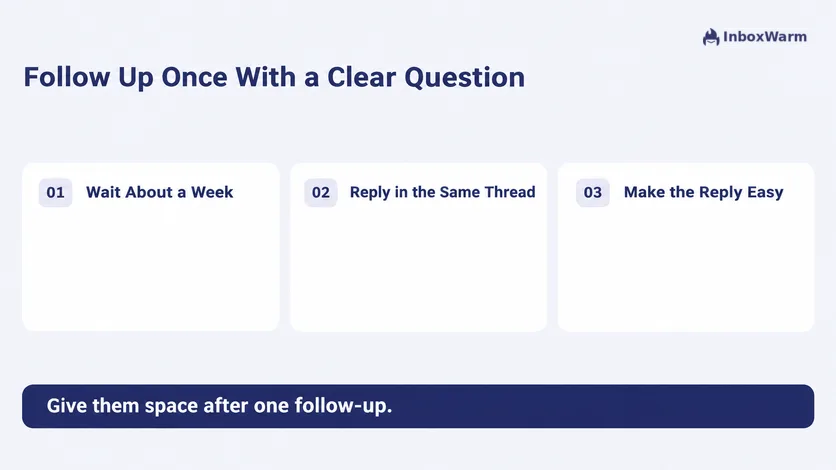
Example follow-up to Maya: Noor replies in the original thread and returns to the customer handoff question.
Subject: Re: Comparing Notes on Customer Handoffs
Hi Maya,
Do you confirm the first milestone before handoff or at kickoff?
Happy to share the two prompts we use if helpful.
Best wishes,
Noor
What Should You Check Before Sending?
- Verify the name, role, and work you reference.
- Read the first two sentences together. They should explain why you’re writing to this person.
- Keep one clear request and make the effort it requires clear.
- Check whether you can share what you’ve offered without exposing internal information.
- If they reply, thank them and follow through on anything you offered to share.
Frequently Asked Questions
What Is an Industry Peer Networking Email?
It’s a short introduction to someone who works on a similar problem or in a related role. It gives a specific reason for reaching out and invites a small exchange, such as answering one question by email or comparing notes on a short call.
What Should I Put in the Subject Line?
Name the shared topic in plain language. “Comparing notes on customer onboarding” gives the recipient a clear reason to open the email. If you refer to an event or post, use its real name.
Should I Ask for a Call in the First Email?
Start with one question by email if a short written answer would help. Ask for a 10–15 minute call when the topic needs discussion, and say what you’d like to compare.
How Do I Follow Up With an Industry Peer?
If you haven’t heard back after about a week, send one short reply in the original thread. Restate the question or offer an easier way to respond. Leave it there if you still don’t hear back.
Can I Mention a Mutual Connection?
Mention the person only if the connection is real and relevant. If you’d like to say they recommended reaching out, confirm they actually made that recommendation. Ask before naming someone in a way that implies an introduction or endorsement.
Get Your Domain Ready for Networking Outreach
Before reaching out to industry peers, review your domain’s email setup and spot configuration issues that could affect delivery.
